

Starting a New Company in India: A Founder’s Step-by-Step Guide
Embarking on the journey of starting a new company is an exciting venture filled with vision and ambition. However, the path from a brilliant idea to a legally recognized entity can seem complex. This guide provides a clear roadmap for starting your new company in India, covering everything from validating your idea and choosing the right structure to navigating the registration process and managing post-registration compliance.
The Foundation: 5 Key Decisions Before Starting Your New Company
Before you dive into the legal paperwork, it’s essential to build a solid foundation for your business. Making a few key decisions upfront will not only make the registration process smoother but will also significantly impact your company’s future success. Achieving clarity on these points is the first step toward building a thriving enterprise.
1. Finalize Your Business Idea and Name
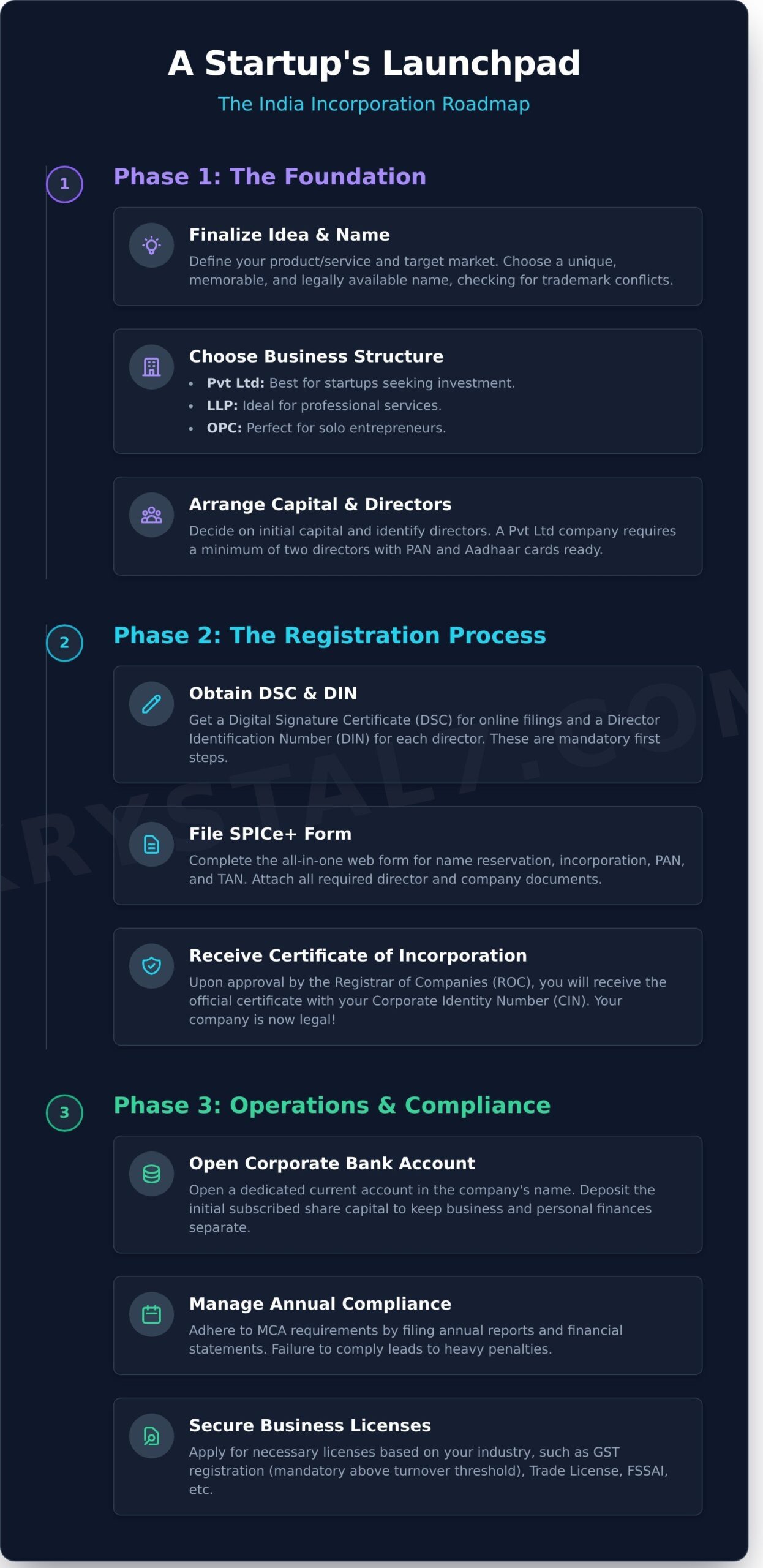
Your business begins with a core idea. Take the time to clearly define your product or service, identify your target market, and establish what makes you unique. Once your concept is solid, you must choose a company name. This name should be distinctive, memorable, and, most importantly, legally available. It’s crucial to check for existing trademarks and company names to avoid conflicts that could force a rebrand later on.
2. Choose the Right Business Structure
The legal structure you choose will affect everything from your liability and tax obligations to your ability to raise funds. In India, the most common structures for new businesses include:
- Private Limited Company (Pvt Ltd): Ideal for startups that plan to seek investment from venture capitalists or angel investors. It offers limited liability protection to its owners (shareholders).
- Limited Liability Partnership (LLP): A popular choice for professional service firms like consultants and accountants. It combines the benefits of a partnership with the limited liability of a company.
- One Person Company (OPC): Perfect for solo entrepreneurs who want the benefits of a corporate entity without the need for partners or multiple directors.
3. Arrange Your Initial Capital and Directors
Before registration, you need to decide on the initial investment, known as the authorised capital, that your company will start with. You also need to identify your founding directors. A Private Limited Company requires a minimum of two directors. Ensure that every proposed director has the necessary identification documents ready, primarily their PAN card and Aadhaar card, as these are essential for the process.
The Registration Process: A High-Level Overview
Once your foundational decisions are made, you can proceed with the official company formation. Thanks to government initiatives, the registration process in India is now highly streamlined and conducted online through a single, integrated form. Understanding the main stages will help you navigate the process with confidence.
Step 1: Obtain Digital Signatures (DSC) and Director IDs (DIN)
In the digital age of corporate filings, a Digital Signature Certificate (DSC) acts as your electronic signature and is mandatory for submitting forms online. Additionally, every individual intending to be a director must obtain a Director Identification Number (DIN). These are mandatory prerequisites for all founders and are the first technical step in the incorporation journey.
Step 2: File the SPICe+ Incorporation Form
The SPICe+ (Simplified Proforma for Incorporating Company Electronically Plus) is the all-in-one web form for company registration. This single application covers name reservation, company incorporation, and applications for key registrations like PAN and TAN. You will need to attach all required documents, including director details and the company’s constitutional documents (Memorandum and Articles of Association), to this form.
Step 3: Receive Your Certificate of Incorporation
After the Registrar of Companies (ROC) reviews and approves your application, you will be issued a Certificate of Incorporation. This certificate is the official, conclusive proof of your company’s existence and legal birth. It will contain your unique Corporate Identity Number (CIN) and the date of incorporation. Congratulations, your new company is now officially registered!
What’s Next? Life After You Register Your Company
Receiving your Certificate of Incorporation is a major milestone, but it’s just the beginning of your compliance journey. To become fully operational and remain in good legal standing, you must take these crucial next steps.
Open a Corporate Bank Account
As soon as you receive your incorporation certificate, your first task is to open a dedicated current account in the company’s name. A corporate bank account is legally required to keep your personal and business finances separate. You must also deposit the initial share capital subscribed by the shareholders into this account.
Understand Your Annual Compliance Duties
Every registered company in India must adhere to annual compliance requirements set by the Ministry of Corporate Affairs (MCA). This involves filing annual reports, including financial statements and details of the board’s meetings. Failing to comply with these statutory deadlines can lead to heavy penalties and can even result in the company being struck off the register. To maintain your peace of mind and focus on growth, Let us handle your annual compliance with crystal clarity.
Secure Necessary Business Licenses
Depending on your industry and turnover, you will need to apply for various business licenses to operate legally. This often includes GST registration, which is mandatory if your turnover exceeds the prescribed threshold. Other common licenses include the Trade License, FSSAI license for food businesses, and Import Export Code (IEC) for international trade. Ensure you are fully cleared to start your business operations without any legal hurdles.
Frequently Asked Questions
How long does it take to register a new company in India?
With the streamlined SPICe+ process, a new company can typically be registered in 7-10 working days, provided all documents are in order and there are no objections from the Ministry of Corporate Affairs.
What is the minimum cost to start a private limited company?
The cost includes government fees, stamp duty (which varies by state), and professional fees. While it can vary, a basic registration package often starts from a few thousand rupees, making it accessible for startups.
Can I register a company on my own without a consultant?
While technically possible, the process involves legal and procedural nuances. Engaging a professional consultant like a Chartered Accountant or Company Secretary is highly recommended to ensure accuracy, avoid errors, and navigate the process smoothly.
Do I need a physical office to register a company?
You need a registered office address in India, but it does not have to be a commercial space. You can use a residential address as your registered office, provided you have the necessary No Objection Certificate (NOC) from the property owner.
What is the difference between a Director and a Shareholder?
A Director is responsible for managing the company’s day-to-day affairs, while a Shareholder is an owner of the company. In many startups and small private limited companies, the directors are also the primary shareholders.
What happens if I miss my annual compliance filings?
Missing annual filings results in significant financial penalties that increase daily. Prolonged non-compliance can lead to the disqualification of directors and the company being declared as “defunct” or “inactive” by the ROC.
Starting a new company is a journey of turning a vision into reality. While the process involves careful planning and legal steps, it doesn’t have to be overwhelming. With chartered expertise, transparent processes, and a dedicated advisor to guide you, you can navigate the path to incorporation seamlessly. Start your new company with confidence. Get a free consultation.

Written by
Nihal Srivastava
Nihal Srivastava is the Co-Founder of Krystal7 Consultants, helping Indian entrepreneurs and startups navigate company registration, compliance, trademark protection, and regulatory requirements with clarity and confidence. With 6+ years of hands-on expertise in MCA filings, GST compliance, and corporate structuring, Nihal has guided 1000+ businesses across India through their legal and compliance journeys. He believes every business dream deserves crystal clear foundations, and that no founder should be held back by paperwork or red tape.





![PMFME Loan Scheme: A Complete Guide for Food Entrepreneurs [2026]](https://blogs.krystal7.com/wp-content/uploads/2026/04/PMFME-Loan-Scheme-A-Complete-Guide-for-Food-Entrepreneurs-2026-Hero-Image-768x439.jpg)