

Avoiding the Stress of Government Notices: A Proactive Guide for Businesses
The sight of an official government envelope can stop any entrepreneur in their tracks. Your focus instantly shifts from growth and vision to deciphering complex legal jargon and worrying about potential penalties. But what if that stress could be eliminated? True peace of mind comes from building a system that prevents these issues from ever arising. For visionary business owners, avoiding the stress of government notices isn’t just about compliance-it’s about reclaiming your freedom to focus on what truly matters: building your legacy.
This proactive guide is designed to deliver that clarity. We will demystify the common triggers for tax and GST notices and provide a clear roadmap for creating a streamlined compliance system that works for you. You will learn how to prevent disruptions to your operations and gain the confidence that comes from knowing your legal obligations are meticulously managed. It’s time to trade overwhelming guesswork for strategic control and get back to growing your business without worry.
Key Takeaways
- The ultimate strategy for avoiding the stress of government notices is a proactive compliance system built on accurate bookkeeping, timely filings, and regular reconciliation.
- Learn to identify the difference between a simple query, a scrutiny notice, and a demand notice so you can respond with confidence, not fear.
- Pinpoint the most common notice triggers from departments like Income Tax and GST, and discover the specific actions to prevent them before they happen.
- Master a clear, 4-step action plan to handle any notice you do receive calmly and correctly, protecting your business and your peace of mind.
Understanding Why Government Notices Are Sent (And Why You Shouldn’t Panic)
The sight of an official envelope from the Internal Revenue Service (IRS), state tax authorities, or the Secretary of State’s office can be intimidating. But the first step in avoiding the stress of government notices is to understand they are a normal part of doing business in a structured economy. A notice is simply a formal communication tool; it is not automatically an accusation of wrongdoing. The goal is not to fear them, but to understand them, respond correctly, and ultimately, prevent them through proactive compliance.
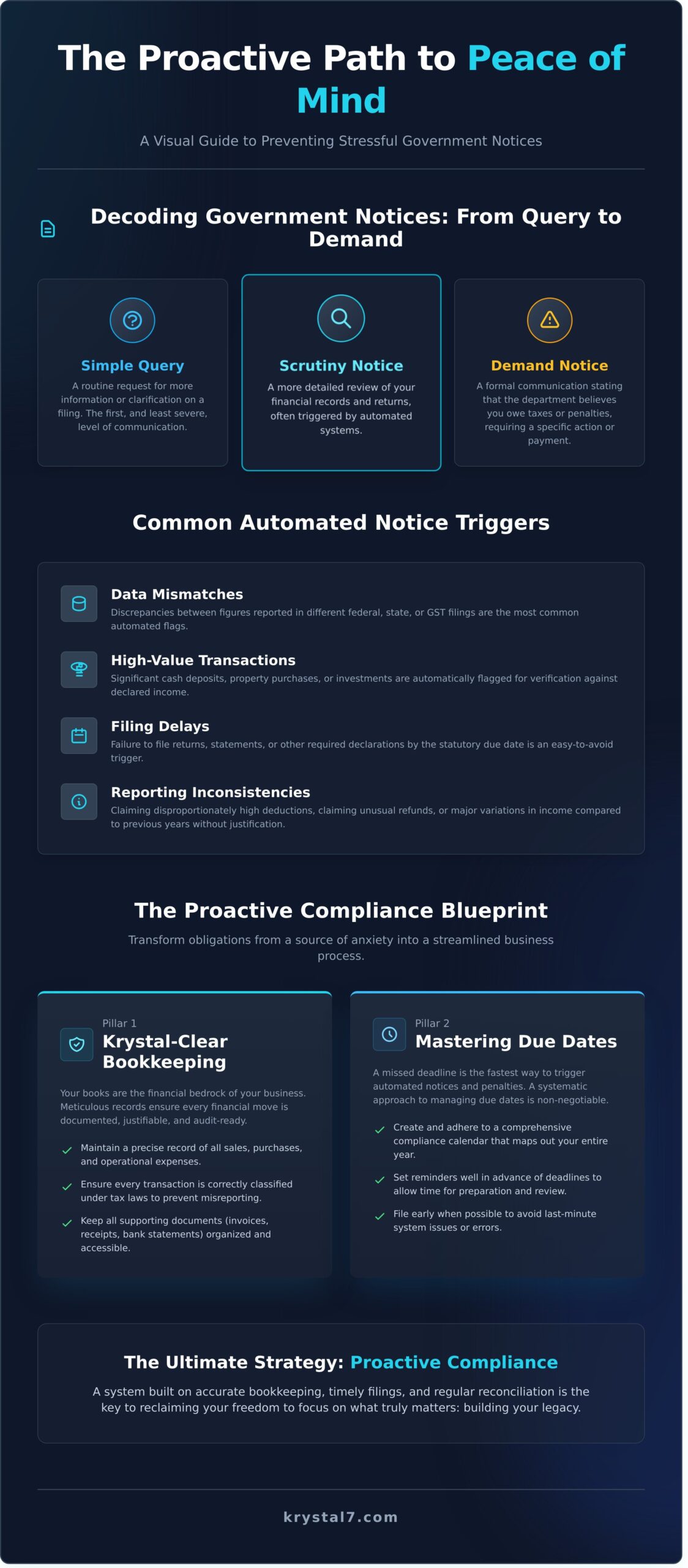
Government communications generally fall into three categories:
- A Simple Query: Often a request for additional information or clarification on a filing.
- A Scrutiny Notice: A more detailed review of your financial records and returns.
- A Demand Notice: A formal communication stating that the department believes you owe taxes or penalties.
In recent years, U.S. federal and state regulatory bodies have shifted to a highly automated, data-driven approach. These systems cross-reference vast amounts of data to ensure widespread regulatory compliance, flagging discrepancies that might have previously gone unnoticed. Understanding what triggers these systems is crucial for any business owner.
Common Triggers for Automated Notices
Most initial notices are triggered automatically when the system detects a potential inconsistency. Staying aware of these common red flags provides clarity on what authorities are looking for:
- Data Mismatches: Discrepancies between figures reported in different federal or state filings.
- High-Value Transactions: Significant cash deposits, property purchases, or investments that are flagged for verification against your declared income.
- Filing Delays: Failure to file returns, statements, or required declarations by the statutory due date.
- Reporting Inconsistencies: Claiming disproportionately high deductions or refunds without sufficient justification, or major variations in income compared to previous years.
The Human Element: Scrutiny and Audits
While algorithms flag issues, complex cases are often selected for manual review or a detailed audit. This is where meticulous record-keeping becomes your greatest asset. Maintaining proper documentation for every single transaction—invoices, receipts, bank statements, and agreements—is non-negotiable. A clean, well-organized financial history not only makes responding to a query straightforward but also significantly reduces the likelihood of your case being escalated for a deeper, more time-consuming human review. Proactive organization is the foundation for avoiding the stress of government notices and achieving true peace of mind.
The Proactive Compliance Blueprint: Preventing Notices Before They Happen
The most effective strategy for managing a government notice is to prevent it from ever being issued. This is the essence of proactive compliance-a disciplined approach that transforms statutory obligations from a source of anxiety into a streamlined business process. Adopting this mindset is the key to avoiding the stress of government notices, as prevention is always less costly and time-consuming than a cure. This proactive framework is central to maintaining good standing, a principle detailed in the comprehensive SBA guide to legal compliance for entrepreneurs. Our blueprint, built on three core pillars, provides the clarity and control you need to manage your legal duties with absolute confidence.
Pillar 1: Krystal-Clear Bookkeeping
Your books are the financial bedrock of your business. Without meticulous records, compliance becomes guesswork. Krystal-clear bookkeeping is the foundation for accuracy, ensuring every financial move is documented, justifiable, and audit-ready. This involves:
- Maintaining a precise record of all sales, purchases, and operational expenses.
- Ensuring every transaction is correctly classified under GST and Income Tax laws to prevent misreporting.
- Keeping all supporting documents like invoices, receipts, and bank statements organized and easily accessible.
Pillar 2: Mastering Due Dates
A missed deadline is one of the fastest ways to trigger an automated notice, penalties, and unnecessary scrutiny. A systematic approach to managing due dates is non-negotiable for staying compliant and demonstrating diligence to regulatory bodies. A robust system includes:
- Creating and adhering to a comprehensive compliance calendar that maps out your entire year.
- Listing all key due dates for TDS, GST, PF/ESI, and ROC filings in one central place.
- Using digital reminders, calendar alerts, or compliance software to ensure you never miss a critical deadline.
Pillar 3: The Power of Reconciliation
Reconciliation is your internal audit-a system of checks and balances that catches discrepancies before they escalate into serious issues. This crucial step verifies that your internal records match the data held by banks and government portals, cementing the accuracy of your filings.
- Regularly reconciling your company bank statements with your books of accounts.
- Matching your sales data (GSTR-1) with your supplier data (GSTR-2A/2B) to prevent Input Tax Credit (ITC) mismatches.
- Cross-checking Form 26AS with your income records before filing your Income Tax Return (ITR).
By implementing this blueprint, you build a resilient business foundation. This methodical approach is the most powerful tool for avoiding the stress of government notices, giving you the freedom to focus on what truly matters: growing your vision.
A Department-Wise Guide to Preventing Common Notices
Knowledge is the ultimate tool for avoiding the stress of government notices. When you understand why a notice is issued, you can take simple, proactive steps to prevent it from ever reaching your desk. This practical guide demystifies the most common communications from key departments, giving you the clarity needed to run a hassle-free business. A solid grasp of your obligations is foundational; for a comprehensive overview, the official SBA guide to legal compliance is an excellent resource.
Income Tax Department Notices
Staying on top of your tax obligations is non-negotiable. Here are the most frequent notices and how to pre-empt them:
- TDS Mismatch Notice: Why you get it: The Tax Deducted at Source (TDS) you’ve claimed in your return doesn’t match the data in the department’s Form 26AS. How to prevent it: Meticulously reconcile your financial records with your Form 26AS before filing your return.
- Defective Return Notice (u/s 139(9)): Why you get it: Your return contains errors or is missing mandatory information. How to prevent it: Double-check every detail-from personal data to income schedules-to ensure your filing is complete and accurate.
- Scrutiny Notice (u/s 143(2)): Why you get it: The department has selected your return for a detailed examination. How to prevent it: Ensure every claim, deduction, and exemption is backed by solid documentation and proof. Good record-keeping is your best defense.
GST Department Notices
The Goods and Services Tax (GST) system relies on timely and accurate data matching. Mismatches are a primary trigger for notices.
- GSTR-2A/3B Mismatch: Why you get it: The Input Tax Credit (ITC) you claimed in your GSTR-3B return exceeds the amount reported by your suppliers in their filings (visible in your GSTR-2A/2B). How to prevent it: Maintain open communication with your suppliers to ensure they file their returns promptly and correctly.
- GSTR-1/E-Way Bill Mismatch: Why you get it: A discrepancy exists between the sales reported in your GSTR-1 and the data from your generated E-Way Bills. How to prevent it: Systematically generate E-Way Bills for all applicable supplies without exception.
- Notice for Non-filing of Returns: Why you get it: You missed the deadline for filing your GST returns. How to prevent it: File on time, every time. This includes filing a NIL return if you had no transactions during the period.
Registrar of Companies (ROC/MCA) Notices
For incorporated businesses, maintaining good standing with the Ministry of Corporate Affairs (MCA) is crucial for avoiding penalties and operational disruptions.
- Notice for Non-filing of Annual Returns (AOC-4, MGT-7): Why you get it: Your company failed to file its annual financial statements and reports by the statutory due date. How to prevent it: Mark these critical deadlines in your corporate calendar and begin preparation well in advance.
- Notice for Not Completing Director KYC (DIR-3 KYC): Why you get it: A director on your board has not completed their mandatory annual KYC verification. How to prevent it: Ensure every director completes this simple but crucial task annually.
- Strike-off Notice: Why you get it: This is a severe notice, often resulting from prolonged non-compliance like failing to file annual returns for consecutive years. How to prevent it: Diligently complete all mandatory compliance each year to keep your company active and in good standing.
Building Your ‘Notice-Proof’ System: People, Processes, and Partners
Reacting to government notices is a cycle of stress and disruption. The key to breaking free is to shift from performing individual compliance tasks to building a proactive, resilient system. A well-designed system is your business’s first line of defense, providing Krystal-Clear clarity and peace of mind. This isn’t just an administrative task; it’s a strategic investment in your company’s stability and your own well-being, essential for avoiding the stress of government notices.
Establishing Internal Processes
Clarity starts from within. A streamlined internal workflow ensures that nothing falls through the cracks. This involves assigning clear ownership for compliance duties, creating a standardized process for documentation, and conducting periodic internal reviews. When your team knows exactly who is responsible for what and how to do it, you eliminate guesswork and catch potential errors before they become problems.
Leveraging Technology
In today’s digital world, the right technology is a powerful ally in maintaining compliance. Modern tools can automate, organize, and safeguard your critical information, transforming complex tasks into manageable routines. A strong tech stack should include:
- Accounting Software: Use platforms like Zoho Books or Tally to maintain accurate, organized, and up-to-date financial records.
- Compliance Calendars: Implement deadline tracking tools or shared calendars to ensure statutory due dates for GST, TDS, and ROC filings are never missed.
- Secure Cloud Backups: Ensure all essential data is regularly backed up and easily accessible, protecting you from data loss and simplifying audit processes.
The Value of a Professional Partner
While internal processes and technology are crucial, the expertise of a professional partner is invaluable. A dedicated compliance consultant acts as your shield, navigating the complexities of changing laws and regulations on your behalf. They bring chartered expertise to ensure every filing is accurate and timely, saving you countless hours of research and effort. This partnership is the most effective strategy for avoiding the stress of government notices, giving you the freedom to focus on your vision.
What to Do If You Receive a Notice: A Calm, 4-Step Action Plan
Receiving an official envelope from a government body can be unnerving, but it’s a standard part of doing business. Even the most diligent companies receive queries. The key to avoiding the stress of government notices is not to panic or, worse, ignore them. Instead, a methodical response transforms a moment of anxiety into a manageable task. Following a clear plan removes fear and uncertainty, empowering you to handle the situation with confidence and clarity.
This simple, four-step process provides a reliable framework for addressing any official communication correctly and on time.
Step 1: Read and Understand
Before taking any action, take a deep breath and carefully read the entire notice from start to finish. Your first goal is complete comprehension. Make a note of these critical details:
- Issuing Authority: Is it from the GST department, Income Tax, or another body?
- Key Dates: Note the date of the notice and, most importantly, the deadline for your response.
- The Exact Query: Identify the specific information, documents, or clarifications being requested.
Step 2: Gather Your Documents
With a clear understanding of what’s needed, begin collecting all relevant paperwork. This may include invoices, bank statements, tax filings, or statutory records. Organize everything chronologically to create a logical and easy-to-follow file. Remember, transparency is crucial. Never create, alter, or back-date any documents. Presenting authentic records is the foundation of a trustworthy response.
Step 3: Draft a Clear Reply
Your written response should be professional, direct, and concise. Begin by formally acknowledging the notice and referencing its unique communication or reference number. Then, address each point of the query separately, using clear headings or bullet points. This structured approach ensures you don’t miss anything and makes your reply easy for the official to review. Attach all your supporting documents as clearly labelled annexures.
Step 4: Consult an Expert and Submit
Even with a well-drafted reply, having a professional review is a wise final step. A compliance expert can spot potential issues you might have missed and ensure your response is legally and professionally sound, which is vital for avoiding the stress of government notices. For ultimate peace of mind, partnering with a dedicated team like Krystal7 Consultants ensures your reply is flawless. Once reviewed, submit it through the designated government portal or method well before the deadline.
Embrace Clarity: Your Path to a Notice-Free Future
The path to business resilience isn’t paved with reaction, but with foresight. By understanding why notices are sent, building a proactive compliance system, and knowing how to respond calmly, you transform a source of anxiety into a manageable task. This strategic approach is the most effective way of avoiding the stress of government notices and reclaiming your focus for what truly matters: your company’s growth.
You don’t have to navigate this complex landscape alone. At Krystal7, we provide the expert shield you need. Our team of top-tier Chartered Accountants and legal strategists is led by a dedicated relationship manager who knows your business, all with Krystal-Clear Transparency and no hidden costs. It’s time to trade compliance worries for the freedom to innovate and build your legacy.
Secure your peace of mind with our Annual Compliance Package. Let us handle the stress.
Frequently Asked Questions
Can I ignore a government notice if I think it’s a mistake?
Absolutely not. Ignoring a government notice, even if you believe it’s an error, is a significant risk that can lead to penalties and legal complications. The correct approach is to file a timely and professional response that clarifies the issue with supporting evidence. This proactive step demonstrates your diligence as a business owner and prevents a minor misunderstanding from escalating into a serious problem, ensuring your statutory standing remains secure and clear.
What are the typical penalties for late filing or non-compliance in India?
Penalties for non-compliance are designed to be stringent and can accumulate quickly. For GST, late filing incurs a daily fee until the return is submitted. For Income Tax, penalties can include interest on the tax due and a flat penalty for late filing. In cases of significant or repeated non-compliance, authorities can initiate more severe actions. Proactive compliance is always the most cost-effective strategy to avoid these financial and legal burdens.
How much time do I generally get to respond to a notice from the GST or Income Tax department?
The response timeline is always specified in the notice itself and must be strictly followed. Typically, a GST notice may provide a window of 7 to 15 days to respond. For an Income Tax notice, the timeframe is often longer, usually between 15 and 30 days. It is crucial to read every notice carefully to identify the exact deadline, as missing it can result in automatic penalties or further legal action from the department.
Is it better to hire a consultant or manage compliance in-house for a small business?
While managing compliance in-house may seem to save money, the risk of errors and missed deadlines is high for a non-expert. Hiring a professional consultant provides access to specialized knowledge, ensures accuracy, and saves you valuable time. For entrepreneurs focused on growth, partnering with an expert is a strategic investment in avoiding the stress of government notices and building your venture on a solid, compliant foundation from the very beginning.
What is the difference between tax avoidance and tax evasion?
This distinction is critical. Tax avoidance is the legal practice of using legitimate methods and provisions within the tax code to reduce your tax liability. This includes claiming all eligible deductions and credits. Tax evasion, on the other hand, is the illegal act of deliberately misrepresenting or concealing income to pay less tax. While tax avoidance is a smart financial strategy, tax evasion is a criminal offense with severe consequences, including heavy fines and imprisonment.
How can Krystal7 help my business stay compliant and avoid notices?
Krystal7 provides Krystal-Clear compliance solutions designed for your peace of mind. Our team of Chartered Accountants and legal experts acts as your dedicated partner, managing all statutory filings proactively and accurately. We streamline the entire process, from bookkeeping to final returns, ensuring you meet every deadline. By entrusting your compliance to us, you gain the freedom to focus on your vision, making the goal of avoiding the stress of government notices a reality for your business.