

How to Handle a ROC Compliance Notice: A Step-by-Step Response Guide
That official envelope from the Registrar of Companies (ROC) can make any director’s heart skip a beat. Suddenly, your focus shifts from growth and vision to the overwhelming threat of heavy financial penalties, confusing legal jargon, and the daunting prospect of director disqualification. The immediate question is always the same: how to handle a ROC compliance notice without letting it derail your business?
Consider this guide your roadmap from regulatory anxiety to crystal-clear action. We will walk you through a step-by-step process to identify, analyze, and respond to the notice with confidence. Our goal is to empower you to resolve the issue efficiently, restore your company’s compliance status, and gain a complete understanding of the underlying cause. It’s time to trade uncertainty for clarity and get back to building your business legacy.
Key Takeaways
- Understand that an ROC notice isn’t always a crisis; it can be a formal request for information or a routine check for statutory compliance.
- Learn to distinguish between different types of ROC notices to immediately grasp the legal implications and the required level of response.
- Follow a clear, 5-step roadmap on how to handle a roc compliance notice, starting with critical first actions like internal audits and notice validation.
- Avoid common pitfalls by identifying the difference between minor administrative slip-ups and serious non-compliance, ensuring your response is appropriate.
Understanding ROC Compliance Notices: Why Your Company Received One
Receiving a formal letter from the Registrar of Companies (ROC) can be a source of significant anxiety for any director or entrepreneur. But before you get overwhelmed, it’s crucial to understand what this notice is-and what it isn’t. An ROC notice is a formal inquiry issued under the authority of the Ministry of Corporate Affairs (MCA) to ensure companies are adhering to the Companies Act, 2013. The first step in learning how to handle a roc compliance notice is to shift your mindset. View it not as a threat, but as a regulatory check-in-a request for clarity.
The purpose is typically to ensure transparency, update official records, or investigate a suspected compliance gap. Ignoring this communication is the most costly mistake you can make. Silence can lead to severe consequences, including penalties, personal liability for directors, or even a suo-moto strike-off of your company’s name from the register.
The Role of the Registrar of Companies (ROC) in 2026
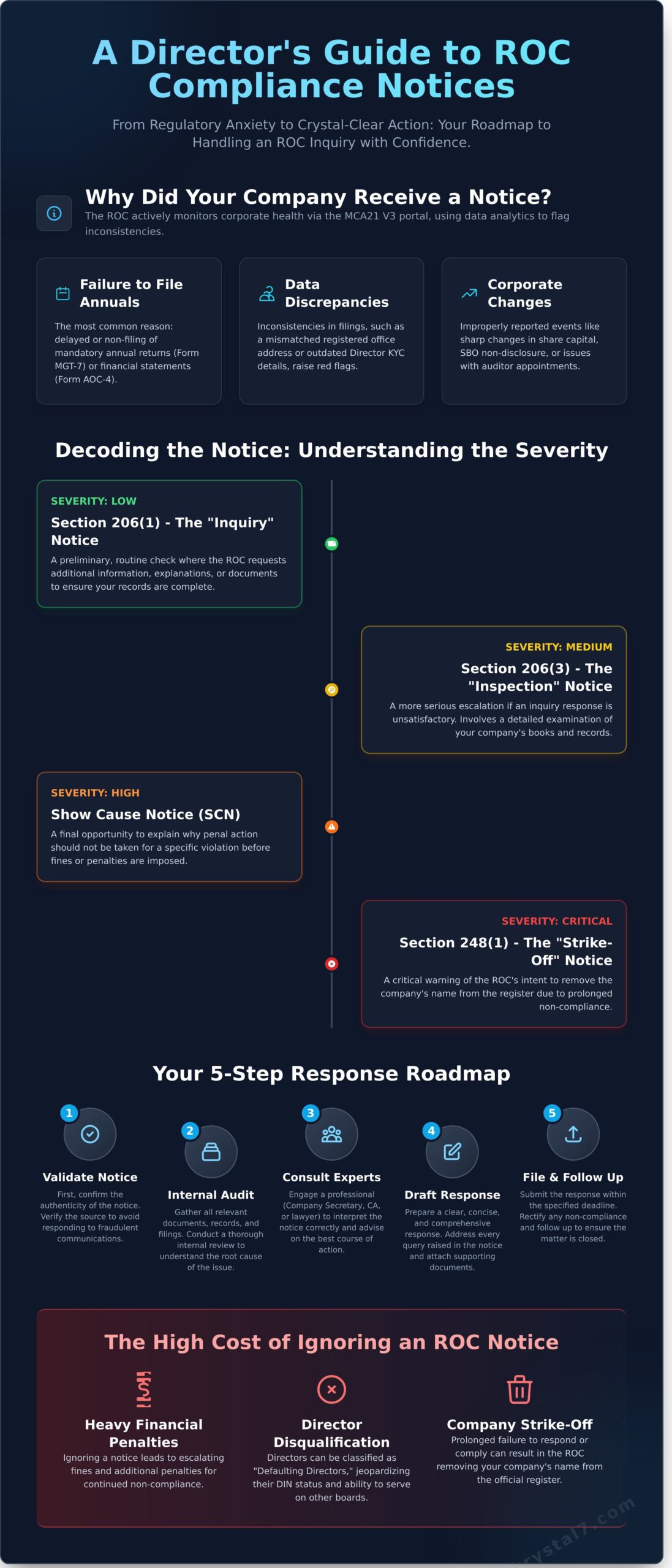
The ROC no longer just passively accepts filings. With the advanced MCA21 V3 portal, the Registrar actively monitors the corporate health of companies through digital filing patterns and data analytics. This system uses automated triggers to flag inconsistencies, leading to more proactive inquiries. As a result, high-growth business hubs are seeing increased scrutiny, making diligent compliance more critical than ever for ambitious ventures.
Common Triggers for ROC Inquiries
While a notice can be issued for various reasons, most stem from a few common oversights. Your company likely received an inquiry due to one of the following triggers, which are all governed by the comprehensive Indian Company Law Overview:
- Failure to File Annual Documents: The most frequent cause is the delayed or non-filing of mandatory annual returns (Form MGT-7) or financial statements (Form AOC-4).
- Data Discrepancies: Inconsistencies between different filings, such as a mismatch in the registered office address or outdated Director KYC details, can raise a red flag.
- Significant Corporate Changes: Sudden or improperly reported events, like a sharp change in share capital, non-disclosure of Significant Beneficial Ownership (SBO), or non-compliance in auditor appointments, often trigger a notice.
Decoding the Types of ROC Notices and Their Legal Implications
Receiving a notice from the Registrar of Companies (ROC) can be unsettling, but understanding its specific nature is the first step toward a swift and effective resolution. Not all notices carry the same weight; they range from simple administrative queries to serious warnings of non-compliance. Bringing clarity to this complexity is key to formulating the right action plan.
The ROC issues several types of notices, each with distinct legal implications. Here’s a clear breakdown of the most common ones:
- Section 206(1) – The “Inquiry” Notice: This is often a preliminary step where the Registrar requests additional information, explanations, or documents related to your company’s filings. It’s typically a routine check to ensure your records are complete and accurate.
- Section 206(3) – The “Inspection” Notice: If the response to an inquiry notice is deemed inadequate or unsatisfactory, the ROC may escalate to an inspection. This is a more serious action that involves a detailed examination of your company’s books and records.
- Section 248(1) – The “Strike-off” Notice: This is a critical warning issued to companies that have failed to commence business or have not filed their annual returns for a significant period. It signals the ROC’s intent to remove the company’s name from the official register.
- Show Cause Notice (SCN): An SCN demands that the company and its officers explain why penal action should not be taken against them for a specific violation. This is a final opportunity to present your case before fines or other penalties are imposed.
Analyzing the Severity of Your Notice
A crucial part of knowing how to handle a roc compliance notice is quickly assessing its severity. A simple query about a specific form is very different from an SCN citing a major contravention, such as a violation of Section 92 (Annual Return) or Section 137 (Financial Statements). Always check the final paragraphs of the notice to identify the mandatory “deadline for response,” as missing it can lead to automatic penalties and further complications.
Director Liability and the “Active” Status
An ROC notice is not just a corporate issue; it has direct consequences for its directors. Failure to comply can jeopardize a director’s DIN status and lead to them being classified as a “Defaulting Director” under Section 164. All these actions are governed by the comprehensive framework of The Companies Act, 2013, which holds directors accountable for statutory duties. This directly impacts your company’s “Active” compliance status, which is essential for securing loans, entering contracts, and even maintaining normal banking operations, making a timely response vital for business continuity.
Common Mistakes vs. Serious Non-Compliance: Identifying the Root Cause
Receiving a notice from the Registrar of Companies (ROC) can feel daunting, but the first step is to bring clarity to the situation. The number one misconception is believing every notice carries the same weight. A simple, accidental filing delay is worlds apart from deliberate financial fraud, and understanding this distinction is crucial for knowing how to handle a roc compliance notice effectively.
Not all non-compliance is created equal. The ROC typically distinguishes between two categories:
- Administrative Slip-ups: These are often procedural errors made in good faith. Examples include typographical mistakes in e-forms, a slight delay in filing Form ADT-1 for an auditor’s appointment, or missing a non-critical deadline. For these, transparency is your best defense. A swift, honest, and corrective response can often resolve the matter with minimal penalties.
- Substantive Non-compliance: These are far more serious violations that question the company’s integrity. This category includes failing to maintain mandatory statutory registers, undisclosed related party transactions, or siphoning of funds. These are not just procedural hiccups; they strike at the heart of corporate integrity, an area where robust enforcement is directly linked to firm value, as highlighted by research from Harvard Law on Corporate Governance.
The Danger of “Guesswork” in Compliance
Attempting to self-diagnose a legal notice often leads to incomplete or incorrect responses that can worsen the situation. Before you even begin drafting a reply, it is essential to reconcile your internal bookkeeping and records with the data available on the MCA portal. An effective strategy on how to handle a roc compliance notice begins with facts, not assumptions. The Statutory Register, a company’s official record of members, directors, and meetings, serves as the primary evidence in most ROC inquiries.
When to Seek “Chartered Expertise”
If your notice alleges financial irregularities, cites specific penal sections of the Companies Act, or threatens director disqualification, it’s a clear signal to stop guessing and engage a professional. A Company Secretary (CS) or legal strategist can interpret the notice’s true intent and formulate a precise, legally sound response. The most effective approach, however, is prevention. Professional Annual Compliance Services for a Private Limited Company are designed to ensure your filings are flawless, preventing these notices from ever being issued and giving you the freedom to focus on growth.
The 5-Step Response Roadmap: How to Handle a ROC Compliance Notice Effectively
Receiving a notice from the Registrar of Companies can be unsettling, but it doesn’t have to derail your business vision. The key is a methodical and transparent response. This structured roadmap provides the clarity you need to address the query with confidence, turning a moment of concern into an opportunity to reinforce your commitment to statutory compliance. Here’s how to handle a ROC compliance notice step-by-step.
- Immediate Internal Audit: The first step is to look inward. Meticulously gather all documents related to the notice, including statutory registers, board minutes, annual filings (like AOC-4 and MGT-7), and financial records. This internal deep dive forms the foundation of a strong, fact-based reply.
- Notice Validation: Before you act, verify. Use the Service Request Number (SRN) mentioned in the notice to confirm its authenticity on the official MCA portal. This crucial check protects you from potential scams and ensures you are responding to a legitimate inquiry.
- Drafting the Preliminary Response: Address every single point raised in the notice with crystal clarity. A well-drafted reply is direct, factual, and leaves no room for ambiguity. Avoid generic statements and focus on providing specific answers to each query.
- Compiling Evidence: Your words must be backed by proof. Compile all supporting documents, such as certified true copies of board resolutions, challan receipts for filings, bank statements, or any other relevant paperwork. Strong evidence is your most powerful tool.
- Submission and Follow-up: File your comprehensive reply and all attachments through the designated MCA e-form or portal. Once submitted, diligently follow up to secure an official acknowledgment. This completes the loop and provides a record of your timely compliance.
Drafting Tips for a Professional Reply
Your response sets the tone. Use a formal, declarative voice that asserts compliance without being defensive. Structure your reply to mirror the paragraph numbering of the ROC’s notice, making it easy for the officer to review. If a technical lapse occurred, acknowledge it honestly and immediately highlight the corrective actions you’ve taken. This demonstrates responsibility and a proactive approach to governance, which is always viewed favorably.
Gathering the Right Documentation
The quality of your evidence is paramount. Essential attachments often include proof of your registered office address (like recent utility bills), details of directors’ DIN cells, and audited financial statements. In certain cases, a sworn Affidavit may be required to formally attest to the truthfulness of your statements. Before submission, always ensure that the Digital Signatures (DSC) of the authorized director are valid and have not expired.
Navigating the nuances of a ROC notice requires precision and expertise. If you need a partner to ensure your response is flawless, the compliance experts at Krystal7 are here to provide the clarity and support you need, giving you the freedom to focus on your business growth.
Navigating Regulatory Scrutiny with Krystal-Clear Professional Support
Receiving a notice from the Registrar of Companies (ROC) can feel daunting, but it doesn’t have to derail your business vision. For entrepreneurs in Gurugram, Krystal7 Consultants is the trusted partner that transforms regulatory complexity into crystal clarity. We don’t just offer advice; we provide a strategic partnership designed to resolve your immediate compliance issues and fortify your company against future risks.
Our methodical approach begins with a deep-dive analysis of the notice and your company’s records. From there, our seasoned experts draft a precise, comprehensive response and manage the entire submission process. This is our “Freedom to Focus” promise in action: we handle the intricate red tape and statutory deadlines, freeing you to concentrate on innovation and growth. Once the current issue is resolved, we help you transition from a reactive stance to a proactive one with our Annual Compliance Packages, ensuring your venture remains secure and compliant year-round.
The Krystal7 Advantage: Elite Expertise Meets Human Touch
Understanding how to handle a roc compliance notice effectively requires more than just legal knowledge; it demands experience and a client-centric approach. At Krystal7, you gain:
- Direct Access to Experts: Work directly with our top-tier Chartered Accountants and Company Secretaries who understand the nuances of ROC proceedings.
- Krystal-Clear Pricing: We operate with complete transparency. You receive a clear, upfront quote with no hidden costs, allowing you to plan with confidence.
- Proven Results: We recently assisted a Gurugram-based tech startup in resolving a complex Section 206 inquiry notice in under 15 days, preventing penalties and restoring their good standing.
Take Action Before the Deadline Expires
The ROC typically provides a strict 15-to-30 day window to respond to a notice. Delay can lead to penalties or further legal action, making swift, decisive action essential. While requesting an extension is sometimes possible, it must be done strategically. Don’t let the clock run out on your company’s compliance. Protect your business and gain peace of mind by partnering with experts who know exactly how to handle a roc compliance notice. Get a Free Compliance Health Check-up Today.
Your Path to Krystal-Clear ROC Compliance
Receiving a notice from the Registrar of Companies can be daunting, but it doesn’t have to derail your business vision. The key is to remain calm and act strategically. This guide has shown that by understanding the specific notice, identifying the root cause, and following a clear response plan, you can navigate the situation effectively. Ultimately, knowing how to handle a roc compliance notice is about transforming a regulatory challenge into an opportunity to strengthen your company’s governance and operational integrity.
But you don’t have to face this complexity alone. Let the experts at Krystal7 provide the clarity you need. With deep expertise in the Companies Act 2013 and the MCA V3 Portal, a Dedicated Relationship Manager for every client, and transparent, upfront pricing, we remove the guesswork from compliance. Secure Your Company’s Future with Krystal-Clear Compliance Support and regain your freedom to focus on growth. Turn compliance into a competitive advantage and continue building your business legacy with confidence.
Frequently Asked Questions
What happens if I ignore a ROC compliance notice?
Ignoring a notice from the Registrar of Companies (ROC) can lead to serious consequences. The authorities may impose significant monetary penalties, which often increase with each day of non-compliance. Furthermore, the company and its directors could face prosecution. This can damage your company’s reputation and lead to its status being marked as “non-compliant” on the MCA portal, creating significant operational hurdles and eroding stakeholder trust. Proactive action is always the best strategy.
Can a ROC notice lead to the closure of my company?
Yes, in persistent or severe cases of non-compliance, a ROC notice can be the first step towards the closure of your company. If a company fails to respond or rectify the issues highlighted in the notice, the ROC has the authority to initiate the process of striking off the company’s name from the official register. This is an extreme measure, but it underscores the critical importance of addressing every official communication from the MCA promptly and thoroughly.
How do I check the status of a ROC notice online?
You can verify the status of any notices or compliance issues on the Ministry of Corporate Affairs (MCA) portal. By accessing your company’s master data or using the ‘View Public Documents’ service, you can review all official filings and communications. This provides Krystal-Clear transparency into your company’s statutory standing. If you find a notice you were unaware of, it is crucial to take immediate action to address the concerns raised by the Registrar.
Is there a penalty for a late response to an MCA inquiry?
Absolutely. The Companies Act, 2013, prescribes specific timelines for responding to official inquiries, and failing to meet these deadlines triggers penalties. These can include daily fines that accumulate until a satisfactory response is filed. Beyond financial penalties, a delayed response can invite further scrutiny from the ROC, potentially escalating a minor inquiry into a more serious investigation. Timeliness is a key component of demonstrating good corporate governance and avoiding unnecessary costs.
Do I need a lawyer to respond to a ROC notice?
While not legally mandatory, engaging a professional like a Company Secretary or a corporate advisor is highly recommended. Their expertise is invaluable in correctly interpreting the notice, gathering the precise documentation required, and drafting a legally sound response. Professional guidance on how to handle a roc compliance notice ensures accuracy, minimizes the risk of further complications, and provides you with the peace of mind and freedom to focus on your core business operations.
What is the difference between an inquiry under Section 206 and an audit?
An inquiry under Section 206 of the Companies Act is a preliminary step where the ROC seeks information or explanations based on a complaint or a red flag in your filings. It is a targeted request for clarification. An audit, on the other hand, is a comprehensive and systematic examination of your company’s financial records to verify their accuracy. While an inquiry is a specific query, an unsatisfactory response to it can lead the ROC to order a more detailed inspection or audit.
Can a director be disqualified for a single compliance lapse?
Disqualification for a single, minor compliance lapse is highly unlikely, especially if it is rectified promptly. Director disqualification is typically reserved for more serious offenses, such as a persistent failure to file financial statements or annual returns for three consecutive financial years, or conviction for offenses involving fraud. However, every lapse contributes to your company’s compliance record, making it essential to maintain a diligent and proactive approach to all statutory duties.
How much does it cost to hire a consultant for ROC notice handling?
The cost of hiring a professional consultant varies based on the complexity of the notice. A simple query will cost significantly less than a notice alleging serious non-compliance that requires extensive documentation and representation. The best approach is to seek a firm that offers transparent pricing. At Krystal7, we provide a clear, upfront quote after understanding the specifics of your case, ensuring you know exactly what to expect as we guide you on how to handle a roc compliance notice effectively.