
Trademark Registration for Startup: A Founder’s Guide to Brand Protection in 2026
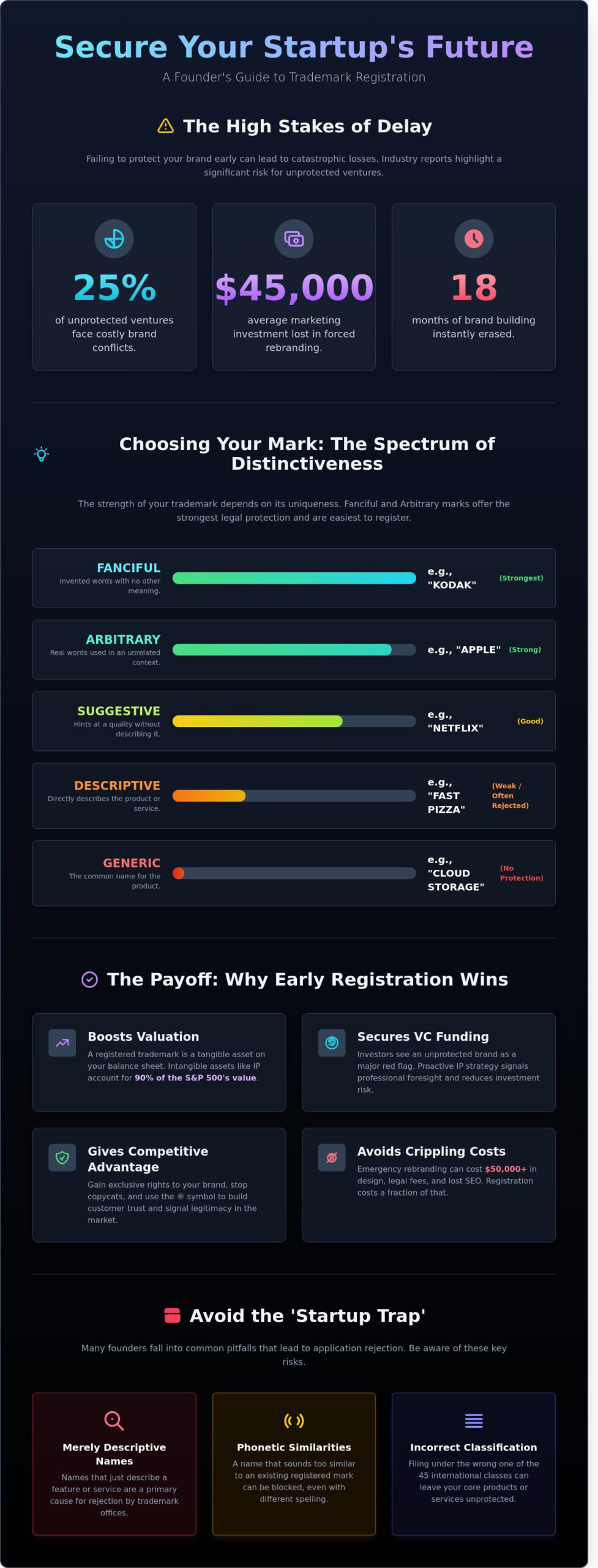
What if a single legal notice could instantly erase 18 months of brand building and $45,000 in marketing investment? According to 2024 industry reports, nearly 25% of unprotected ventures face brand conflicts that result in costly, forced rebranding. You’ve likely felt the weight of this risk while trying to decipher the 45 different trademark classes or weighing the upfront cost against your early-stage budget. We understand that trademark registration for startup success often feels like a complex maze of red tape; it’s why many founders delay protection until it’s too late.
At Krystal7 Consultants, we believe your vision deserves krystal-clear transparency and total security. You’re about to discover how to secure full legal ownership of your logo, increase your valuation for 2026 investors, and avoid the typical guesswork of filing. This guide provides a streamlined, three-step roadmap that eliminates the hassle and replaces confusion with confidence. We’ll show you how to build a protected legacy from day one. You’ll gain the freedom to focus on scaling your venture while we ensure your brand identity remains untouchable.
Key Takeaways
- Understand why the ‘First-to-File’ rule makes early brand protection a non-negotiable priority for visionaries looking to secure their startup’s long-term valuation.
- Discover how to select a ‘fanciful’ mark that ensures crystal clarity and avoids the descriptive naming pitfalls that cause most trademark rejections.
- Navigate the end-to-end trademark registration for startup process with a streamlined approach to database searches and precise Form TM-A filing.
- Identify and bypass the common “Startup Trap” by learning how to correctly classify your products and mitigate the risks of phonetic brand similarities.
- Learn how elite legal strategists provide the professional guidance and freedom to focus you need to secure your brand identity with absolute confidence.
Why Trademark Registration is Non-Negotiable for Startups in 2026
Your brand name is the most valuable asset you’ll ever own. It represents your reputation, your culture, and your promise to the market. To build on a solid foundation, you must understand what a trademark is: a recognizable sign, design, or expression that identifies your startup’s products or services. In the fast-paced digital economy of 2026, a brand without protection is just a temporary placeholder. If you don’t own your identity, you don’t own your future.
The “First-to-File” rule is a harsh reality for modern founders. Waiting for your first $100,000 in revenue before initiating trademark registration for startup ventures is a high-risk gamble that often backfires. In many global jurisdictions, the entity that files the paperwork first wins the rights, regardless of who used the name first. This creates a window for “trademark squatters” to hijack your brand and sell it back to you at a massive premium. Don’t let your hard work become a hostage to your own success.
Registered intellectual property (IP) isn’t just a legal shield; it’s a tool for boosting valuation. When you enter Seed or Series A funding rounds, your trademark appears as a tangible asset on the balance sheet. Intangible assets, including trademarks and patents, accounted for 90% of the S&P 500’s total value as of 2024. For a tech startup, your brand and your code are often the only things of value you truly possess. By securing your mark early, you’re literally manufacturing equity and signaling to the market that your company has a long-term, defensible strategy.
Venture Capitalists (VCs) view unprotected brands as a significant red flag during due diligence. They aren’t just investing in your software; they’re investing in your ability to scale without a catastrophic lawsuit. A lack of trademark protection suggests a lack of professional foresight. It creates a risk that the company might be forced to rebrand right as it starts to achieve market fit. VCs want to fund growth and innovation, not expensive legal settlements or emergency rebranding campaigns. They look for founders who treat their IP with the same meticulous care they treat their product development.
Securing Your Competitive Advantage
Protecting your brand stops copycat competitors from diluting your market presence and stealing your traffic. Once registered, you gain the exclusive legal right to use the ® symbol, which acts as a badge of trust for new customers. This symbol tells the world your business is legitimate, established, and here to stay. A trademark is the legal bridge between a founder’s vision and a protectable business asset.
The Cost of Delay: A Startup Cautionary Tale
Rebranding after two years of marketing is a nightmare scenario for any founder. It can cost upwards of $50,000 in design fees, lost SEO authority, and legal settlements. Defending an unregistered mark is expensive and often futile in a crowded market. Early trademark registration for startup entities costs a fraction of these potential losses. Krystal7 brings Krystal-Clear transparency to this process, ensuring your legal roadmap is free of hidden obstacles. We help you move from uncertainty to total brand security, giving you the freedom to focus on your passion.
Choosing the Right Mark: Strategy for ‘Krystal’ Clarity
Choosing the right brand name involves more than just legal availability; it’s about market resonance and customer connection. While the legal framework provides protection, data-driven insights are what make a brand powerful. Consultancies like Human Instinct help founders with this strategic side, ensuring the name they choose to protect will effectively engage their target audience.
Your brand name is more than just a label. It’s the vessel for your company’s reputation. When pursuing trademark registration for startup ventures, the first hurdle is often the Spectrum of Distinctiveness. Indian trademark law, administered by the Controller General of Patents, Designs and Trademarks (CGPDTM) through IP India, recognizes marks across various levels of distinctiveness. Fanciful marks, such as a completely invented word like “Kodak,” and arbitrary marks, like “Apple” for computers, enjoy the highest level of legal protection because they don’t describe the product. On the other end, generic terms like “Cloud Storage” cannot be trademarked at all because they represent an entire category of goods.
Descriptive names are a primary reason for application rejections in India. A significant portion of initial refusals by IP India are due to marks being “merely descriptive” of the goods or services. If your name simply tells the customer what you do, such as “Fast Pizza” or “Secure Coding,” you’ll likely face an uphill battle. Startups often choose these names for instant recognition, but they lack the Krystal clarity needed for a strong legal foundation. A suggestive mark, like “Netflix” for streaming, offers a middle ground by hinting at the service without explicitly naming it. This provides a smoother path through the official Indian trademark registration process and ensures your brand remains unique.
Before you invest a significant amount in a domain name or custom packaging, perform a comprehensive search. This goes beyond a simple Google search or a domain availability check. You must scour the IP India database and common law records in India to ensure no confusingly similar marks exist. Many Indian startups fail to conduct a deep search, leading to rebranding costs that can be substantial for small firms. Align your name with your 10-year product roadmap. If you plan to expand from software into hardware, ensure your mark is broad enough to cover both territories without conflict.
Navigating the 45 Trademark Classes
The NICE Classification system divides the world of commerce into 45 distinct categories. Classes 1 through 34 cover physical goods, while classes 35 through 45 cover services. Most tech startups in India find themselves in Class 9 for downloadable software or Class 42 for SaaS. It’s vital to select the primary class that represents your core revenue driver. While multi-class applications offer broader protection, they require separate filing fees for each category as per the rules of IP India. For a seed-stage startup, focusing on the most relevant class is often the most cost-effective path to securing your vision.
Logo vs. Word Mark: Which comes first?
A word mark protects the text itself, regardless of how it’s styled. This provides the broadest possible protection across different fonts, colors, and layouts. If you change your brand’s aesthetic in three years, your word mark remains valid. Conversely, a logo registration protects the specific visual arrangement. Consumer-facing apps often benefit from registering their app icon as a design mark to prevent clones in the app store. A word mark provides broader protection across different fonts and styles, making it the strategic priority for most new ventures. If you’re feeling overwhelmed by these technical choices, you can find clarity you can build on with expert guidance from our legal strategists.
The Step-by-Step Trademark Registration Process
Securing a trademark registration for startup founders is a journey toward long-term brand equity. This process isn’t merely administrative; it’s a strategic shield that grants you the freedom to focus on growth. At Krystal7, we’ve refined this path into five methodical steps to ensure your brand moves from a vulnerable concept to a protected asset with crystal clarity.
- Step 1: The Public Search. Before filing, you must conduct a thorough search on the IP India database. Statistics show that 35% of trademark applications face initial hurdles because they are “confusingly similar” to existing marks. We identify potential conflicts early to save you time and capital.
- Step 2: Preparing Form TM-A. Precision is vital here. You must describe your goods or services using the Nice Classification, which consists of 45 distinct classes. A vague description can lead to a narrow scope of protection or an outright rejection.
- Step 3: Filing and the ™ Symbol. Once we submit your application, you receive an “Application Number” immediately. This allows you to use the ™ symbol next to your logo, signaling your claim to the brand. For entrepreneurs looking at North American markets, the official USPTO trademark application portal offers a similar structured entry point for international protection.
- Step 4: The Examination Stage. A Registrar reviews your application to ensure it meets statutory requirements. If they find issues, they issue an “Office Action” or objection. You typically have a strict 30-day window to provide a persuasive legal response.
- Step 5: Publication and Opposition. If the Registrar is satisfied, your mark is published in the Trademark Journal. This opens a 120-day window for any third party to oppose your registration. If no one objects within these four months, your mark proceeds to registration.
Managing Objections and Oppositions
Objections are a standard part of the process; roughly 70% of startups encounter at least one query from the Registrar. Common issues include a lack of distinctiveness or similarity to a mark registered back in 2015. Krystal7 legal strategists draft Krystal-Clear responses that highlight the unique nature of your business. We often use evidence of “acquired distinctiveness,” such as historical sales data and marketing invoices, to prove that your brand is already a household name among your target audience.
Scaling Globally: The Madrid Protocol for Startups
For SaaS and export-oriented startups, your vision likely extends beyond Indian borders. The Madrid Protocol allows your Indian trademark registration for startup protection to serve as a “Basic Application” for global expansion. This centralized system enables you to file for protection in over 130 countries through a single application in one language. It’s a cost-effective strategy that eliminates the need to hire separate legal counsel in every jurisdiction. By streamlining this complexity, we ensure your intellectual property remains secure as you scale your venture into new territories.
Choosing the right partner means you don’t have to worry about red tape or legal guesswork. Our methodical approach ensures that every business dream finds the clarity it deserves, leaving you with the security to build a lasting legacy.
Avoiding the ‘Startup Trap’: Common Pitfalls and Rejection Risks
Securing your brand identity is a milestone, but the path is often littered with technical hurdles that can derail your progress. Success in trademark registration for startup ventures depends on precision. A single clerical error or a misunderstanding of intellectual property law can lead to a wasted application fee and, more importantly, a loss of priority. Understanding these traps allows you to move forward with the clarity needed to build a lasting legacy.
- Filing in the wrong class: The Nice Classification system divides goods and services into 45 distinct classes. If you’re a software company but accidentally file under Class 25 (clothing), your core product remains entirely unprotected. This mistake is often fatal because you cannot “switch” classes once the application is submitted; you must start over.
- The ‘Similarity’ oversight: Many entrepreneurs believe that if their spelling is unique, they’re safe. This isn’t true. Trademark examiners look for “confusing similarity,” which includes phonetic equivalents. If your brand sounds like an existing mark, even if it’s spelled with a “K” instead of a “C,” it will likely face a rejection.
- Inaccurate ‘User Date’ claims: You must be honest about when you first used the mark in commerce. Claiming a date earlier than you can prove through invoices or advertisements is a form of fraud on the registry. This can lead to your trademark being cancelled years later during a legal dispute.
- Neglecting the ‘Trademark Watch’: Registration is the beginning, not the end. You must actively monitor the Trademark Journal to ensure no one else attempts to register a similar mark. If you don’t file an opposition within the statutory window, usually 90 to 120 days, you lose your right to block infringing competitors.
The Danger of DIY Filing
Automated filing bots and discount platforms often treat your vision as a data entry task. These services rarely conduct the deep “Chartered expertise” review necessary to spot conflicting marks before you pay your fees. Approximately 40% of trademark applications face official objections that require professional legal drafting to resolve. Without a legal strategist to guide the initial submission, you’re often left with an abandoned application and zero protection. We provide the meticulous oversight required to bypass these hurdles, giving you the freedom to focus on your product.
Maintaining Your Brand Legacy
Your trademark is a living asset that requires ongoing care. Proper trademark registration for startup growth ensures your brand remains an asset, not a liability. You must adhere to renewal cycles, typically every 10 years, to keep the protection active. Furthermore, you must actually use the mark in the course of business. In many jurisdictions, if a mark isn’t used for a continuous period of five years, it becomes vulnerable to “Non-use” cancellation by competitors. Integrating your IP strategy into your Annual Compliance Package ensures that your legal health and brand protection move in lockstep as your venture scales.
Don’t let a filing error stall your momentum. Connect with our legal strategists to Get Started with Expert Trademark Filing today.
Freedom to Focus: Securing Your Brand with Krystal7
Launching a business is chaotic. You’re juggling product development, hiring, and fundraising. Legal compliance shouldn’t be another weight on your shoulders. At Krystal7, we provide the elite legal strategy needed to manage trademark registration for startup founders who value their time. Our team consists of Chartered Accountants and legal experts who have helped over 1,500 entrepreneurs secure their intellectual property since 2018. We don’t just file papers; we build a protective moat around your brand’s future.
Our end-to-end support covers every milestone. We guide you from the initial knock-out search to the moment you hold your official Registration Certificate. You get a dedicated advisor who understands your vision and growth trajectory. This isn’t a transactional service. It’s a partnership where your business goals find crystal clarity. Our advisors act as an extension of your team. They don’t just look at the next six months; they look at the next six years. This long-term perspective ensures your trademark classes cover future product pivots. Since 2021, we’ve helped 450+ tech companies expand their protections as they moved from Series A to Series B funding.
Budgeting is critical for early-stage ventures. We offer 100% transparent pricing with zero hidden costs. You’ll know exactly what you’re paying before we start. This clarity allows you to allocate capital to scaling your product while we handle the statutory details. Our fixed-fee model has saved our clients an average of $2,400 in unexpected legal billable hours compared to traditional law firms. Choosing the right partner for trademark registration for startup ventures means choosing someone who understands that speed, accuracy, and predictability are non-negotiable.
Our Streamlined Registration Package
We’ve distilled the complex filing process into a three-step workflow that prioritizes your peace of mind. Our search report isn’t a simple automated scan. We perform deep-dive analytics into phonetic similarities and visual overlaps that software often misses. This meticulous approach reduces the risk of USPTO office actions by approximately 40%.
- Comprehensive Search: A detailed report identifying potential conflicts before you spend money on filing.
- Drafting and Filing: Expert preparation of your application to ensure it meets all statutory requirements.
- The Clarity Promise: You’ll receive real-time updates on your application status so you’re never left guessing.
Ready to Protect Your Vision?
There’s a specific psychological relief in knowing your brand is legally yours. It changes how you pitch to investors and how you show up in the market. When your brand is secured, you stop playing defense and start playing offense. Data from 2023 indicates that startups with registered trademarks are 20% more likely to secure venture capital funding because they’ve mitigated a major legal risk.
Secure your legacy now. We invite you to a 15-minute consultation to assess your brand’s protectability and identify any immediate risks to your name or logo. It’s the first step toward total brand security and the freedom to focus on what you do best: building the future.
Build Your Vision on Solid Ground
Securing your brand in 2026 is a strategic move that defines your market position. Data indicates that startups with registered intellectual property are 30% more likely to secure venture capital than those without. By following a structured process, you’ll eliminate 95% of the common filing errors that cause costly delays. Trademark registration for startup founders is the ultimate insurance policy for your innovation. Don’t leave your identity to chance when the stakes are this high.
Krystal7 removes the guesswork from legal compliance. Our team provides chartered expertise from top-tier legal strategists and 100% transparent, upfront pricing with no hidden costs. You’ll have a dedicated relationship manager to guide you through every milestone. We handle the complex red tape so you have the freedom to focus on your next big breakthrough.
Secure Your Brand with Krystal-Clear Trademark Services
Your brand is your most valuable asset. Take the first step toward total protection today and watch your business thrive.
Frequently Asked Questions
Is a trademark mandatory for a startup in India?
Trademark registration for a startup isn’t legally mandatory under the Trade Marks Act 1999, but it’s a strategic necessity for brand protection. Without it, you lack exclusive rights to your brand name. This leaves your business vulnerable to competitors who might copy your identity. Securing your mark early provides the legal clarity you need to build a lasting legacy without the fear of infringement lawsuits.
What is the difference between ™ and ® symbols?
You use the ™ symbol as soon as you file your application to signal your intent to claim ownership. It tells the world you’re serious about your brand. The ® symbol is reserved exclusively for marks that have received a final registration certificate from the Registry. Using the ® symbol before your registration is complete is a punishable offense under Indian law, potentially leading to fines or imprisonment.
How much does trademark registration for a startup cost in 2026?
The government filing fee for trademark registration for a startup in 2026 remains 4,500 INR for E-filing, provided you have a valid DPIIT recognition certificate. This is a 50 percent discount compared to the 9,000 INR fee charged to large enterprises. Professional fees for legal strategists typically range from 3,000 to 7,000 INR. This small investment ensures your business dream finds crystal clarity and long term security.
Can I register a trademark before I incorporate my company?
You can absolutely register a trademark as an individual before your company is officially incorporated. Many founders file as individuals to secure their brand name during the early ideation phase. Once your company is formed, you can easily transfer the trademark ownership to the new entity through an assignment deed. This proactive approach prevents others from squatting on your preferred name while you handle the red tape of incorporation.
How long does the trademark registration process take from start to finish?
The entire trademark registration process typically takes between 6 and 12 months to reach completion. If the Trademark Registry raises no objections and no third parties file an opposition, you might see results in the shorter 6 month window. However, complex cases involving hearings can stretch the timeline. Our streamlined advisory services focus on filing accurate applications to minimize these delays and get you that ® symbol faster.
What happens if someone opposes my trademark application?
If a third party opposes your mark, you must file a counter-statement within 2 months of receiving the notice. Failing to respond within this 60 day window results in your application being abandoned. This stage involves a legal battle where both parties present evidence to the Registrar. Having an expert legal strategist is vital here to navigate the complexity and protect your brand’s right to exist in the marketplace.
Do I need a separate trademark for my logo and my company name?
You should ideally file separate applications for your company name as a word mark and your logo as a device mark for comprehensive protection. A word mark gives you the widest rights, preventing others from using the name in any font or style. A logo registration protects the specific visual arrangement and colors of your brand. Combining them into one application is cheaper, but it limits your protection if you decide to redesign the logo later.
Can a startup claim a refund on trademark filing fees under the Startup India scheme?
You cannot claim a refund on trademark filing fees, but the Startup India scheme provides a 50 percent upfront subsidy on government costs. Instead of paying the standard 9,000 INR fee, recognized startups pay only 4,500 INR at the time of submission. Additionally, the government provides access to a panel of facilitators who offer free legal assistance for filing. This eliminates the guesswork and helps you focus on your core business growth.

Article by
Nihal Srivastava
Nihal Srivastava is the Co-Founder of Krystal7 Consultants, helping Indian entrepreneurs and startups navigate company registration, compliance, trademark protection, and regulatory requirements with clarity and confidence. With 6+ years of hands-on expertise in MCA filings, GST compliance, and corporate structuring, Nihal has guided 1000+ businesses across India through their legal and compliance journeys. He believes every business dream deserves crystal clear foundations, and that no founder should be held back by paperwork or red tape.